Zhanna Kadyrova
Second Hand (2014-ongoing)
Courtesy: the artist and GALLERIA CONTINUA, San Gimignano / Beijing / Les Moulins / Habana.
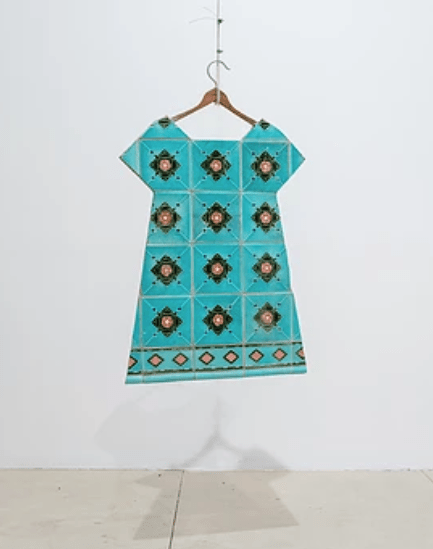
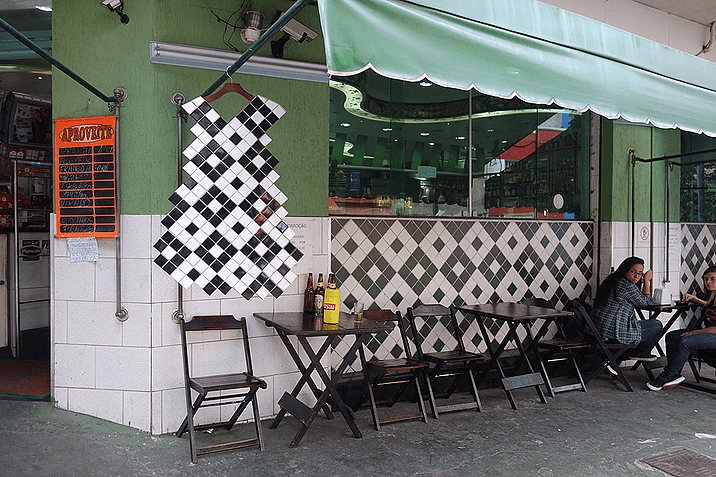
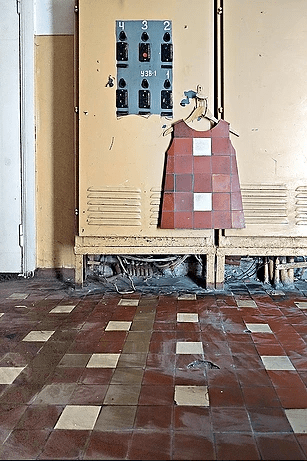
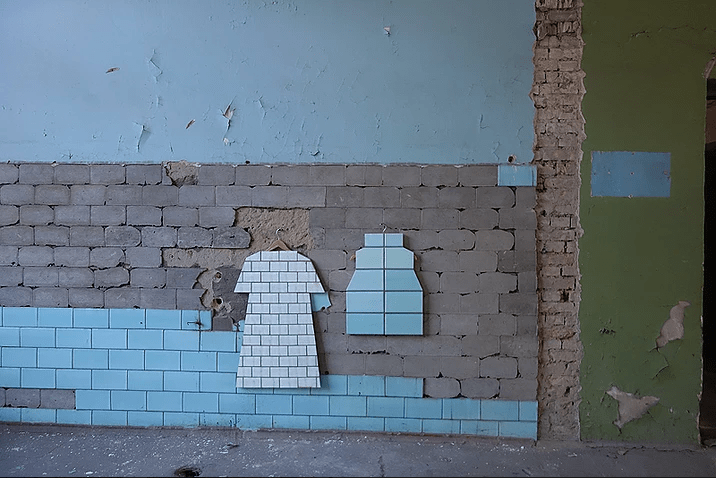
In her series of textile mosaics, Zhanna Kadyrova explores the relationship between architecture and memory. Kadyrova gathers ceramic tiles from second hand shops and from once-important abandoned buildings and repurposes them to create three dimensional mosaic-style articles of clothing, linens, and even undergarments. This project began in 2014 in Sao Paolo and has since been presented in a number of countries including the Ukraine, Cuba, and Italy featuring garments made from local materials.
Courtesy: the artist and GALLERIA CONTINUA, San Gimignano / Beijing / Les Moulins / Habana.
The ceramic tiles are often gathered from the location in which the final works of art are displayed, creating a strong connection between the artworks’ material and the built environment that surrounds it. The durability of ceramic tiles suggests that these repurposed materials tell a story that will likely outlive the architecture from which they were once a part. In fact, Kadyrova’s 2017 installation that took place inside the old Kiev Film Copy Factory (once the largest in the Soviet Union) used materials from the building that was demolished just a few months after her installation took place. Kadyrova’s exhibition at the Darnitski Silk Factory in Kiev used tiles from the factory walls, demonstrating a particularly close connection between artwork, memory, architecture, and place.
Courtesy: the artist and GALLERIA CONTINUA, San Gimignano / Beijing / Les Moulins / Habana.
Courtesy: the artist and GALLERIA CONTINUA, San Gimignano / Beijing / Les Moulins / Habana.
Kadyrova’s mosaics also refer to the medium’s integral role in Soviet-era Ukrainian culture. Monumental mosaic murals, a state-led alternative to street art, were created throughout the Ukraine and often used for government propaganda. They sometimes reflected the style of Byzantine mosaics, many of which can be found in Ukrainian cathedrals dating back to the 11th century. Considering mosaics served both a political and a religious function, it is evident that mosaic art was significant part of Ukrainian culture and have been an integral part of its architectural landscape for centuries. After Ukrainian independence (1991) and subsequent decommunization (2015) Soviet mosaics came to perform a more decorative function and many that have communist images and messages have been (or are planned to be) dismantled. Kadyrova’s sculptural mosaics perhaps mirror the history of mosaic art in the Ukraine; they imply a function by virtue of their form/content (clothing is meant to be worn) yet fail to function in the way their form suggests. In the end, these works of art are purely decorative despite the history they embody.
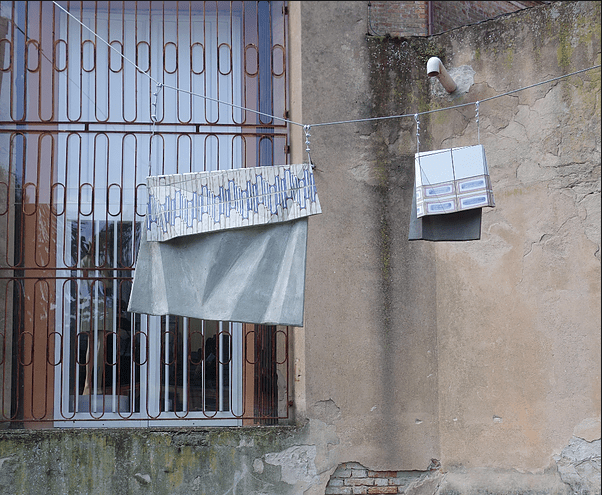
Courtesy: the artist and GALLERIA CONTINUA, San Gimignano / Beijing / Les Moulins / Habana.
Connections between memory, architecture, history, and place are present in Kadyrova’s mosaics in many ways: her materials are imbued with meaning by virtue of their connection to architectural histories, the medium she uses reflects and contributes to the history of mosaic art in the Ukraine, and the site-specific nature of her exhibitions creates connections between material and place. Together, these aspects of Kadyrova’s artworks carry forward material, architectural, and social histories, one tile at a time. ▪︎
Zhanna Kadyrova is a Ukrainian artist who lives and works in Kiev.
 Here + There
I really like this blog. Interesting and beautiful.
LikeLike