Joan Semmel
Self-Images (1974-1979)
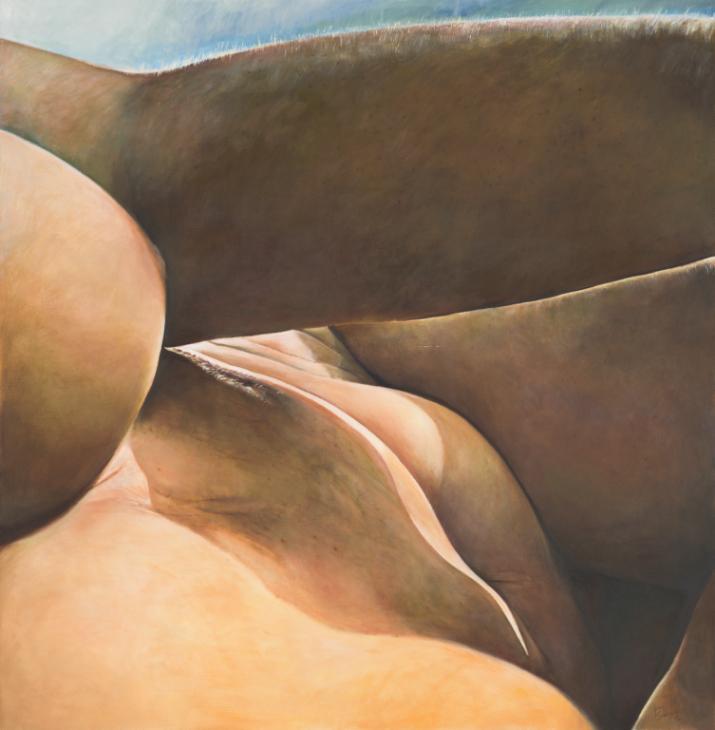
Joan Semmel’s honest, candid, and unidealized self-portraits disrupt the history of the representation of the female body typically found in art made by men for men. In Semmel’s attempt to make sexual art from a woman’s perspective, she grapples with the question “how does one depict a nude body without objectifying the model?”
Is this even possible?
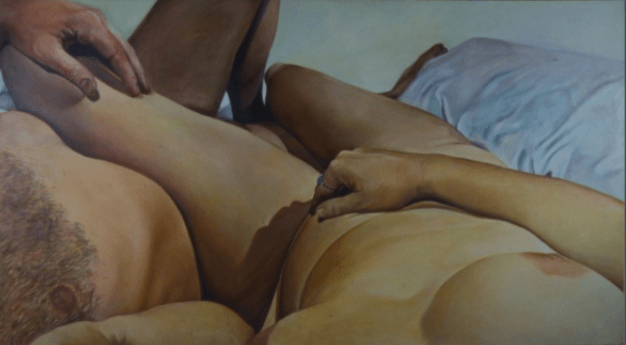
In Semmel’s faceless, foreshortened renderings of her own body, the viewer takes the artist’s place in their perception of the female figure. The artist uses direct observation to represent her own body not as others see it but as she has experienced it. In this way, the female nude is liberated from the male spectator. This perspective that the viewer has taken – as Semmel herself – also makes it clear that the artist is a woman. In the 1970s while the majority of feminist artists were working in new media such as video and installation, Semmel was one of the few women artists to chose painting as her medium.
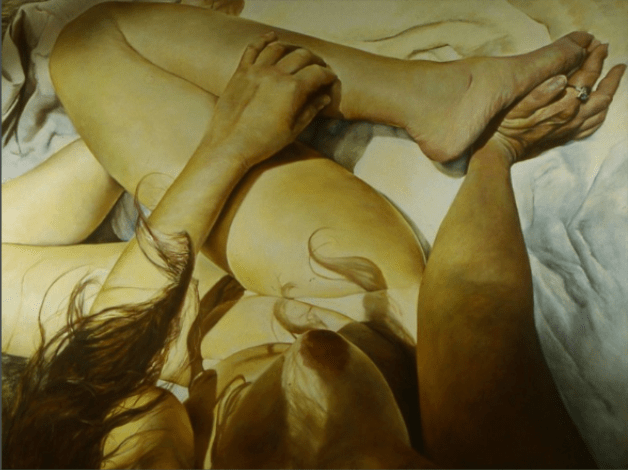
Semmel still paints today at the age of 86 and struggles with ideas surrounding self-representation and aging: “the nude is a problem for me at a certain age, because where do you go with it? […] I don’t want to get stuck in the pathology of aging; I want to do the reverse. I want to normalize age. How does one do that and still be seductive? That is what I’m thinking about.” ▪︎
Joan Semmel is an American feminist painter, professor, and writer.
 Here + There